Why a business card curls, cracks or goes soft
A card that was flat and crisp in the box can, three weeks later, look like it has been through a wash. It curls upward at the corners, the fold in a folded card has cracked white along the crease, or it has simply gone limp and cannot stand up on a desk. None of these is bad luck. Each one comes from a decision made before the card was printed: which board, which way the grain ran, whether it was laminated on one side or two, and how it was stored between the press and your pocket. Once you know which fault comes from which cause, most of them are easy to specify out of your next order.
Grain direction: the cause most people have never heard of
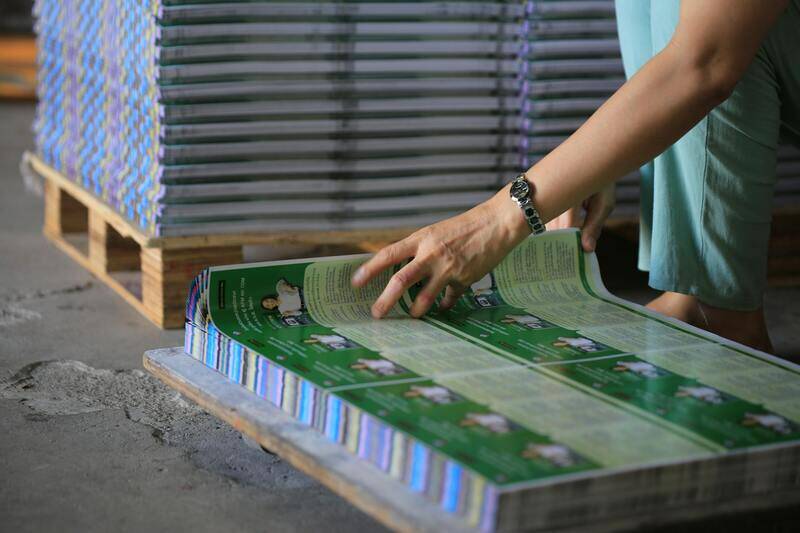
Paper and board are made from fibres that line up in the direction the sheet travelled through the paper machine. That direction is the grain. Fibres swell across their width when they take on moisture, far more than along their length, so a sheet changes size mostly across the grain. Fold along the grain and the fibres bend cleanly; fold against it and they break, which is the white cracked line you see on a folded card.
For a flat 90 x 54 mm business card, grain matters in two ways.
- Curl. If one side of the card is coated or laminated and the other is not, the two faces absorb humidity at different rates. The uncoated side swells across the grain, the laminated side cannot, and the card bows. A card with long grain (fibres running along the 90 mm edge) curls along its short axis and looks like a gutter; short grain curls the other way. Either is annoying, but the long-grain gutter is the one people notice because the card will not lie flat in a holder.
- Stiffness. Board is stiffer along the grain than across it. A long-grain card resists bending along its length, which is the direction it gets flexed when it is pushed into a wallet. A short-grain card of the same weight feels noticeably floppier when held by one end.
Printers cut cards from large sheets, and the imposition determines the grain on the finished card. A good print shop imposes business cards long grain by default. If your cards feel weaker than a sample of the same weight from elsewhere, grain is the first thing to ask about.
Humidity: the Singapore factor
Relative humidity in Singapore sits between 70 and 90 percent for most of the year. Board leaves a paper mill conditioned to about 50 percent, so it starts absorbing moisture the moment the wrapping comes off. A 350 gsm uncoated card can gain 2 to 3 percent of its weight in water within a few days, and that water is what makes a card soft.
The effects are predictable:
- Uncoated cards go limp faster than coated ones because the surface is open.
- Cards laminated on one side only curl within days, sometimes hours, because the moisture goes in one face.
- Cards laminated both sides are sealed at the faces but not at the cut edges, so they stay flat but will still soften slowly over months.
- Cards stored in an open holder on a reception desk under aircon go through a wet-dry cycle every day and fatigue faster than cards left in a closed box.
The practical answer is to specify both-sides lamination or both-sides uncoated, not a mix, unless you have a reason such as a writing side. If you must have one side uncoated, keep the cards in their box until they are needed and hand them out in small batches.
Cracking on folds and scored edges
Folded business cards, tent cards and cards with a scored flap crack for two reasons: the fold runs against the grain, or the board was not scored before folding. Scoring presses a channel into the board so the fibres on the outside of the fold have room to stretch instead of breaking. Any board over about 250 gsm needs it. Lamination makes the problem worse and better at the same time: the film holds the surface together so the crack shows less, but a heavy solid ink under the film still splits, and the split is very visible on a dark colour.
If the design has a dark solid across the fold, ask for the score to be made from the side that will be on the inside of the fold, and consider a matte laminate rather than gloss. Gloss film shows every fibre that lifts along the crease.

Which faults come from which choices
| Symptom | Most likely cause | Fix on the next order |
|---|---|---|
| Card curls into a gutter | One-side lamination, humidity | Laminate both sides or neither |
| Card feels floppy for its weight | Short grain, or uncoated board absorbing moisture | Ask for long grain; consider 350 gsm or a coated board |
| White line along the fold | No score, or fold against grain | Score before folding; grain parallel to fold |
| Corners fray and fluff | Uncoated board cut with a dull blade, then handled | Rounded corners; coated or laminated stock |
| Cards stick together in the box | Fresh gloss laminate or wet ink, stacked warm | Let the job cure; ask for matte or soft-touch |
| Surface scuffs and marks | Soft-touch or uncoated on a dark solid | Matte laminate over dark solids; avoid soft-touch for cards handled daily |
The difference between coated and uncoated boards, and how each behaves when handled, is covered in more depth in the guide to coated or uncoated name card stock.
What you can do after printing
A curled card can often be flattened by leaving the stack under a heavy book overnight in an air-conditioned room, which pulls the moisture back out of the uncoated face. It will curl again once it goes back into a humid wallet, but it buys time for a launch or an event. Cards that have gone soft do not recover; the fibres have relaxed. Cracked folds cannot be repaired. All three are cheaper to prevent than to live with, which is why the stock and finish questions in the order form are worth answering carefully rather than accepting the defaults.
Storage helps more than people expect. Keep the box closed, keep it out of a car, and take out a week's supply at a time. A card case with a lid is better than an open holder, and both are better than a jacket pocket.
How we specify cards so they stay flat
Every card from our name card printing service is imposed long grain, and the boards we stock are chosen for how they behave in local humidity rather than how they look in a European swatch book. For a standard card we recommend 350 gsm with matte lamination on both sides: it stays flat, resists scuffing, and takes a pen on a sticker label if you ever need to write on it. Where a design calls for an uncoated writing side, we say so at the quote stage, so the curl is a known trade-off rather than a surprise.
Folded cards are scored as standard on any board above 250 gsm. If you are unsure which board suits your design, we can post a sample pack of the common weights and finishes before you order, so you can leave one in your wallet for a week and see how it behaves. Details of the stocks and finishes are on the business and name cards page, and you can ask for samples through the contact page.
A card that stays flat for six months does not look like a technical achievement. It just looks like a card that was printed properly, which is the whole point.